 Schedule of Classes
 Maps
Maps Canvas
 Directory
 Library
 LancerPoint
 Calendars
 Bookstore
 Student Email
 News & Events
 Police & Safety
 PCC Connect
 Parking
 COVID-19 Info
Become a global citizen and doors will open
World Languages and Cultures
Become a global citizen and doors will open
World Languages and Cultures
We are a community of explorers, artists, and thinkers. Come learn with us and let language be your passport to the world.
Step into a world of words, culture, and connection with our comprehensive language program, offering classes from elementary to advanced levels. Whether you're mastering conversation for business or travel, studying literature, writing, translation, civilization, or even cinéma, our curriculum is designed to ignite your passion for language.
PCC offers more languages than any other college in the Los Angeles area, including many universities. We don't just teach languages, we open doors to the world.
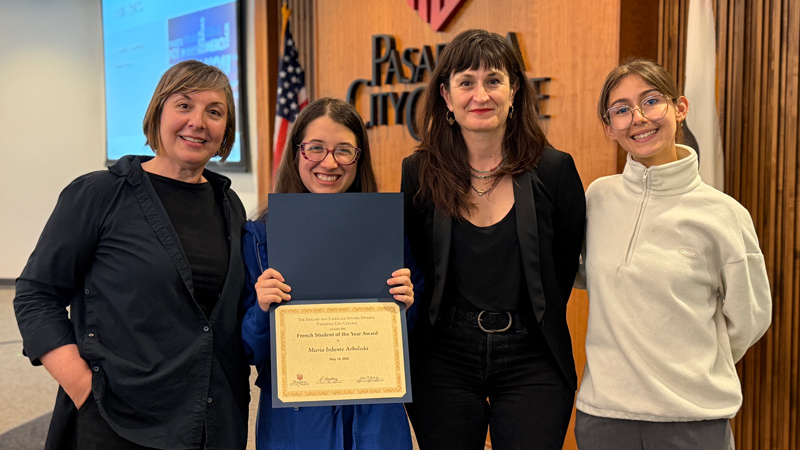
Our amazing team of Language Professors is here to guide you to success.
The Benefits of Taking Your Language Credits at PCC…
- Save between $3000 and $50,000
- Complete your foreign language units faster or entirely before you transfer to a 4-year university (many universities require level 3 or level 4 of a foreign language to graduate)
- Fulfill Humanities and Arts requirements
- Obtain Occupational Skills Certificates, Certificates of Achievement, and AA degrees
- Find community through our student clubs, events, and field trips
Beyond the Classroom